

Commercial painting · Southeast Wisconsin
Commercial exterior painting built for the Wisconsin season.
Exterior painting for storefronts, strip centers, apartment buildings, offices and industrial buildings in Milwaukee and Waukesha County, with lifts and scaffolding for multi-story work, prep done before paint, and a schedule planned around the short Wisconsin painting window.
- Bonded & insured
- Free, no-pressure estimates
- Written warranty up to 10 years
Storefronts
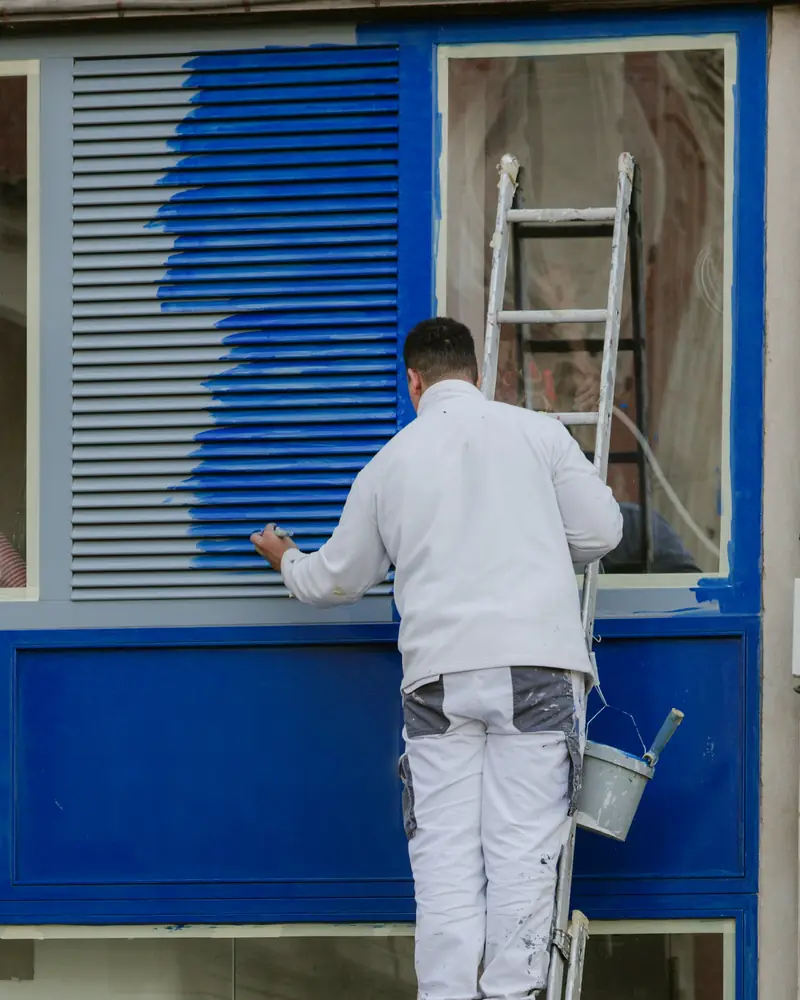
Storefronts and strip centers: the face your customers see
A storefront is a sales tool. Customers decide how well a business is run partly from its entrance, and an owner of several tenants in a strip center has to keep a row of different businesses looking like one property. The usual trouble spots are the same ones every year: trim and door frames at the entrance, where hands and weather hit hardest; fascia and canopy edges that stay wet; metal posts and railings that rust at the base; and the sign band that fades faster than the walls.
Read moreShow less
We scope a storefront job by elevation and by tenant: which walls, which trim, which doors, which canopy, and in what order, so one tenant is not blocked while another is open. For a strip center, the plan also covers sequence along the row, so the whole facade is finished in the same season and the colors read as one.
The work is scheduled around business hours where it needs to be. Entrances are kept clear and signed where they must stay open, and the areas at the doors are done early or late in the day where we can.
Larger buildings
Apartment buildings, offices, warehouses, churches and schools
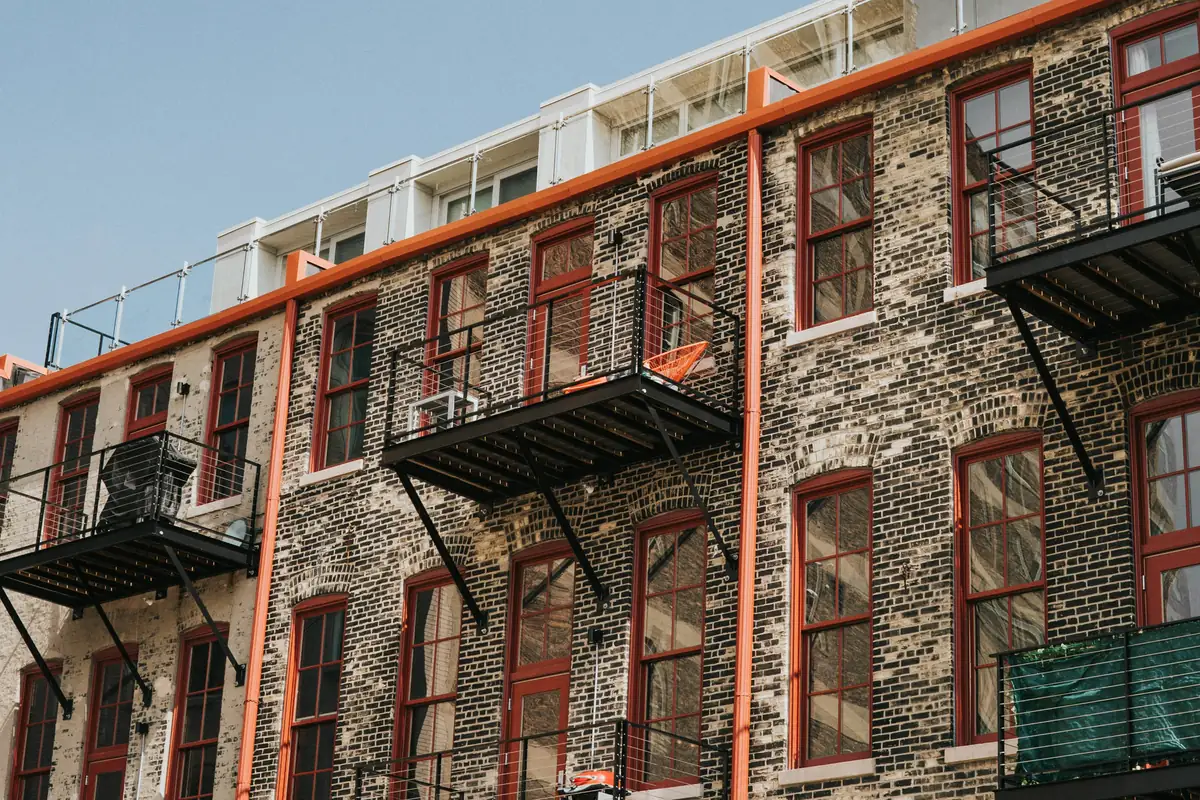
Beyond the storefront, a commercial exterior is often a big, plain wall that has to be coated evenly and a long list of small details that have to be done one by one. An apartment building has balconies, railings, stair towers, entry canopies and trash enclosures. An office building has frames, panels and a ground-level entrance that gets the most traffic.
Read moreShow less
A warehouse or industrial building has large walls, overhead doors and steel doors and frames at the loading areas, where vehicles and carts scrape the finish first. A church or school has entry doors, trim and covered walkways that are seen every week by the same people.
New construction follows a different path. The surfaces are raw, so the scope is priming and finish coats in the order the other trades allow, with the paint waiting for the siding, masonry and metal work to be finished, and for the weather. We agree the sequence with whoever is running the site, because the painting date depends on theirs.
For associations and owners with several buildings, we recommend scoping them together. Matching colors and sheens from building to building is easier when the same crew applies them in the same season, and a written scope makes it easy to see what was done to each.
Surfaces
Masonry, metal and siding: the substrate decides the system
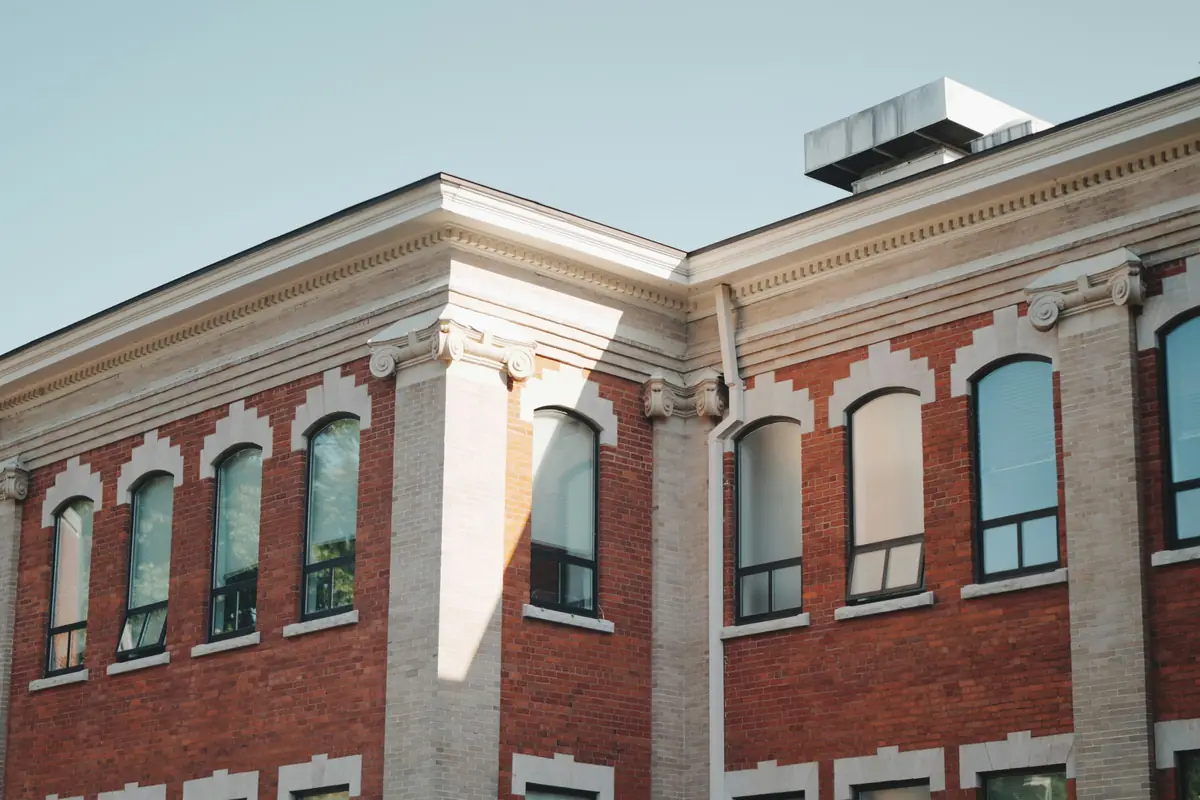
Commercial exteriors mix materials: block and brick, stucco and EIFS, metal panels, doors and frames, wood trim, fiber-cement and vinyl siding, and concrete. Each takes a different coating and different preparation, so a good scope names the substrate before the product.
Masonry is porous and holds moisture, so it should be clean and dry before coating, and a masonry coating should let the wall breathe. Painted metal is about corrosion: loose rust is removed, bare metal is primed with a product made for metal, and edges and fasteners, where failure begins, get extra attention. Wood trim needs sound wood, primer on bare spots and sealed joints. Siding needs a clean, sound surface and a coating the manufacturer approves for it.
For the general prep facts on wood and siding, our residential guides explain why paint fails in this climate, including why exterior paint peels after a Wisconsin winter. Sherwin-Williams also publishes a paint problem solver that describes the failure modes and their causes by symptom.
Prep
Prep and power washing before any exterior paint
Exterior paint is only as good as the surface under it. On commercial buildings that means a wash to remove dirt, chalk, mildew and traffic film; scraping and sanding of loose or failed coatings back to a sound edge; removal of loose rust; repair of damaged caulk and failed sealant at joints; and spot priming of bare and stained areas. Only then do the finish coats go on.
Read moreShow less
Washing needs care. Water pressure that is useful on a clean wall can damage soft masonry mortar, push water behind siding and strip sound paint along with the loose. We wash the surface, not blast it, and we keep run-off in mind near drains, lots and landscaping. In some towns, municipal stormwater rules limit what can reach the storm system, and our Muskego page covers one such rule as it affects house washing.
This is the work that is easiest to leave out of a low bid and the work that decides how long the finish lasts. We list it in the written scope so it can be compared line by line.
Access
Lifts, scaffolding and access for multi-story commercial buildings
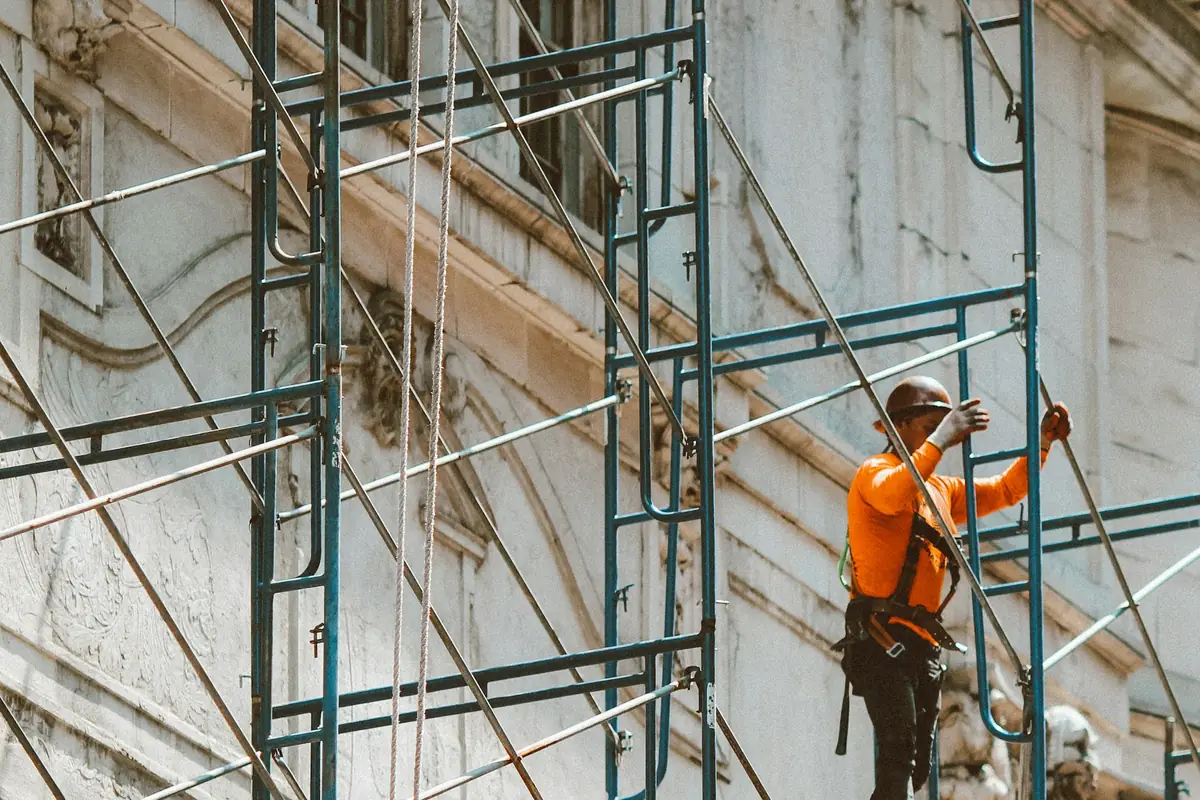
Painting above the first floor needs equipment that reaches the wall safely. We use lifts and scaffolding for multi-story exteriors. Which one fits depends on the building: a lift suits long open walls with a flat approach; scaffolding suits tight spots, stairwells, balconies and repeated access to the same elevation over several days.
Access also means ground logistics. A lift needs a firm, level place to stand and a clear path to the wall. Parking, loading areas, walks and landscaping need protection and, in places, temporary closing. We walk the site with you to agree where the equipment goes, which areas are closed and for how long, so tenants and customers are not surprised.
Equipment is part of the written scope and is a real cost driver, so we list it separately and you can see what it is for.
Working around people
Keeping an occupied property open while the exterior is painted
Most commercial exteriors are painted while the building is in use, so the plan has to protect the people walking in and out as much as the surfaces. That begins with the routes: which doors stay open, which are closed for a day, where deliveries arrive and where visitors park. Walks, entrances, planters and landscaping next to the work are covered or protected, and areas under active work are marked so no one walks into wet paint or under equipment.
Read moreShow less
Where a building cannot afford a closed entrance, we work in sections: one door, one bay or one elevation at a time, with the next section starting once the last is clear. Where the business closes at night or on a particular day, we can schedule the busiest elevations after hours or on weekends, within the weather limits that govern exterior coatings. Not every task suits evening work, because paint needs light, dry surfaces and a temperature range, but the preparation and some of the finish can often be timed around your hours.
We clean up at the end of each day, so the property looks like a working site instead of a construction site. At the end of the job we walk the building with you, write down anything that needs another look and fix it before we call the job finished. The finished work is covered by a written limited workmanship warranty of up to 10 years, depending on the scope in your estimate.
The season
The Wisconsin season and the temperature windows that govern exterior paint
Exterior coatings have temperature limits printed on the label. Sherwin-Williams gives 50°F as the normal minimum for latex house paint and says some exterior lines can be applied, and will cure, down to 35°F. It advises keeping conditions in range and above the dew point for about 48 hours after each coat. Benjamin Moore publishes a similar temperature guide.
Read moreShow less
When paint goes on too cold or gets damp before the film forms, both makers describe the same results: slow drying, poor adhesion, peeling and staining (Sherwin-Williams, Benjamin Moore).
NOAA climate normals show that in Milwaukee and Waukesha counties June through August are the steadiest months for nights that stay above 50°F, with September next, and that May and October depend on the product and the forecast. The month-by-month numbers for eight stations are in our guide to when to paint outside in Wisconsin.
For a commercial owner, the practical consequence is lead time. Exterior work on a larger building takes days or weeks, and each of those days needs its own weather. Bids in late winter and a booked start date in spring are the way to land inside the window rather than at the tail of it.
Where we work
- Waukesha
- Brookfield
- Menomonee Falls
- Pewaukee
- Elm Grove
- New Berlin
- Muskego
- Hartland
- Delafield
- Oconomowoc
- Milwaukee
- Wauwatosa
- West Allis
- Whitefish Bay
- Shorewood
- Mequon
- Bay View
- Greenfield
- Franklin
Common questions
What commercial exteriors do you paint?
Storefronts, strip centers, apartment and other multi-family buildings, offices, industrial and warehouse buildings, churches and schools, and new construction. Tell us the building type and the materials when you request an estimate.
Can you paint a multi-story building?
Yes. We use lifts and scaffolding for multi-story exteriors, chosen to suit the building. The equipment and the ground logistics are listed in the written scope.
Can you paint brick, block and metal?
Yes. Masonry, metal doors and frames, panels, wood trim and siding each get the preparation and coating system suited to the material, named in the written scope.
When is the best time of year to paint a commercial exterior in Wisconsin?
Late spring through early fall, within the temperature range on the coating label. June through August are the steadiest months, and May, September and October depend on the product and the forecast. Book early in the year to secure a start date.
Can you work around tenants and customers outside?
Yes. We plan elevations and entrances so doors stay usable, sign areas that must stay clear, and schedule the busiest entrances early or late in the day where we can.
What does exterior prep include on a commercial building?
A wash, scraping and sanding of failed coatings, rust removal, caulk and sealant repair, and spot priming of bare areas. These steps are listed in the written scope so you can compare bids on the same basis.
Planning a commercial exterior repaint?
Free estimate across Waukesha County & Greater Milwaukee. Lifts and scaffolding for multi-story buildings.
Request an estimate
We’ll call or email to set a time.
Thanks — we’ve got it.
We’ll call or email to set a time.