

Fence staining · Southeast Wisconsin
Fence staining and painting for Milwaukee and Waukesha homes.
Fence staining and fence painting in Milwaukee, Waukesha, Brookfield and the rest of southeast Wisconsin.
- Bonded & insured
- Free, no-pressure estimates
- Written warranty up to 10 years
Stain or paint
Stain vs paint for wood fences
A wood fence is a long run of boards sitting in rain, snowmelt and sprinkler spray, so the finish choice and the weather on the day matter as much as the stain. Here is how we think about both, and a free estimate to confirm the details for your fence.
Read moreShow less
Homeowners who ask about fence staining in Milwaukee or fence painting in Waukesha are usually asking the same question in two ways: what finish should go on the boards? We paint and stain wood fences across Waukesha County and Greater Milwaukee, and the answer depends on what the fence looks like today and what you want it to look like.
Paint gives an even, opaque color and hides the wood. A solid-color stain also covers the grain, but as a thinner film that leaves more of the wood texture visible. A semi-transparent stain tints the wood and lets the grain show through. The practical difference is how each one ages. Paint and heavy films can peel or flake when moisture gets behind them, and that leads to scraping when it is time to redo the fence. A thin stain tends to wear away instead, so refreshing it usually means cleaning and recoating rather than scraping.
What is on the fence now matters too. A fence that already carries paint or a solid-color stain is a different job from bare or weathered wood, and the product that suits one may not suit the other. We look at the fence and tell you which route fits before you commit.
Preparation
Fence prep: wash, dry and repair before any stain
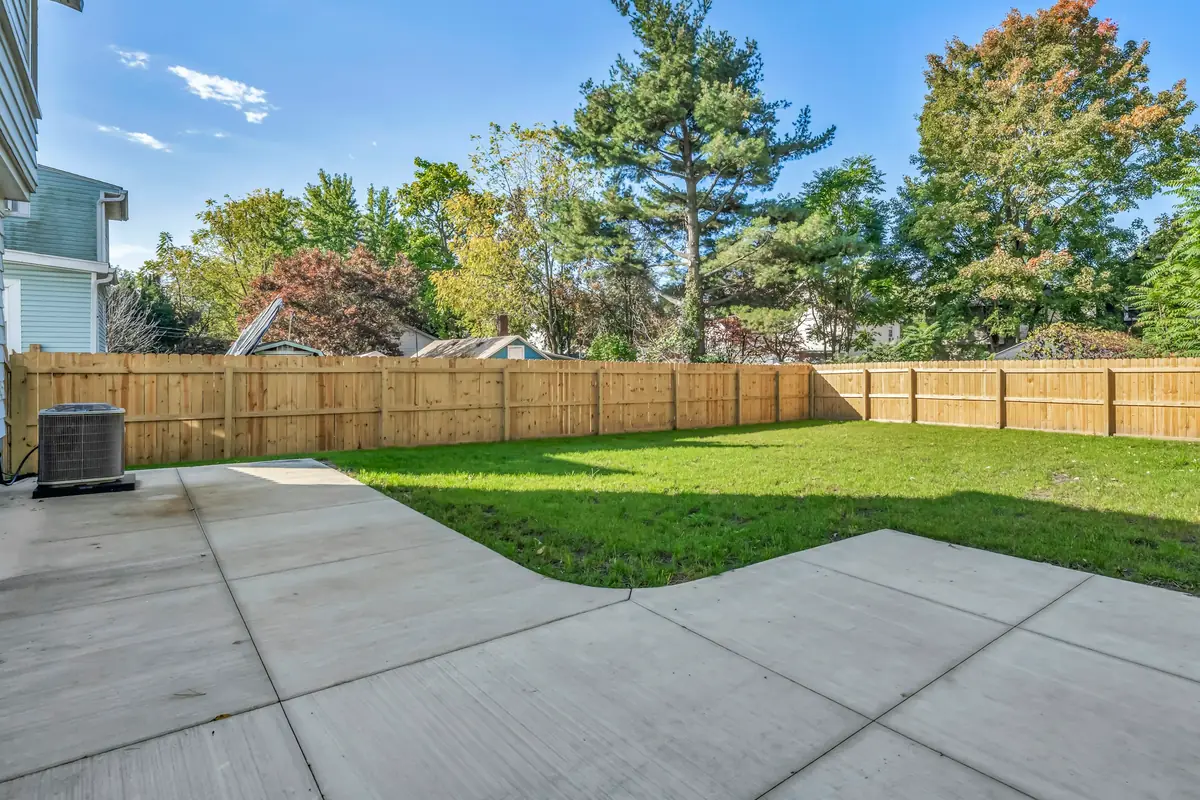
Prep decides how a fence finish looks and how long it lasts. The order is simple: clean, let the wood dry, repair, then coat.
Read moreShow less
Cleaning removes dirt, mildew and loose fibers so the stain meets bare wood instead of a film of grime. Drying matters just as much. Wood that is still damp does not take a finish well, and a coating laid over moisture is the usual way a fence ends up peeling. Sherwin-Williams tells homeowners to let a surface dry for two to three days after rain before staining (Sherwin-Williams, applying exterior stain), which is longer than most people expect and the reason a fence job is booked by the forecast, not the calendar.
Repairs come before color. Loose boards, popped or rusting fasteners, split rails and leaning posts are far easier to deal with before a fresh finish goes on than after. We check for these on the walk-through and point out what we see, so the estimate reflects the fence you actually have. Whether a repair is something we handle or something a fence contractor should do is decided at the estimate, not assumed.
Because snowmelt, sprinklers and splash-back keep the lowest boards wet longest, the bottom of the fence is the place to look hardest. If the lower boards are soft, dark or flaking, say so when you ask for an estimate.
Choosing a finish
Semi-transparent vs solid stain: how to choose
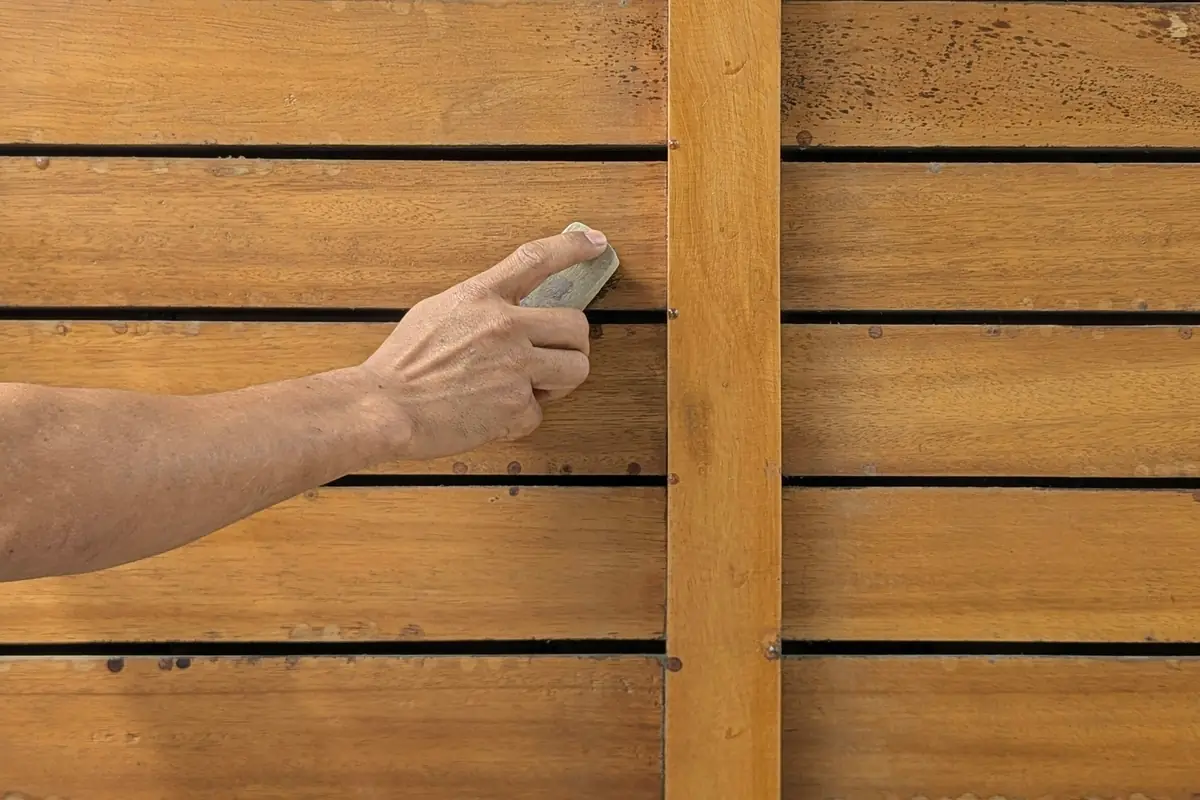
A semi-transparent stain keeps the grain and knots visible and adds a tint. It suits fences with attractive wood, and it is the more forgiving option at refresh time, because it wears away rather than building a film. A solid-color stain hides the grain and evens out boards that have weathered unevenly or been repaired with new lumber, and it gives a stronger color change. Paint goes further still when you want a painted fence in a specific color, such as white or black.
Read moreShow less
Sherwin-Williams notes that an extra coat gives a darker look and is worth applying to badly weathered or unfinished wood, and that each coat needs to dry completely, usually about 24 hours (Sherwin-Williams, applying exterior stain). Check the label of whatever product is chosen, since coat counts and dry times differ.
We confirm the product and the opacity in your estimate, after we have seen the fence. We do not decide on a stain from a photo, and we would rather tell you that a semi-transparent stain will not hide an old painted surface than sell it to you anyway.
What about vinyl fences?
Stain is made to soak into wood. Vinyl is a smooth plastic that does not absorb it, so a vinyl fence is not a candidate for staining. Painting vinyl is a different matter and needs a coating labelled for vinyl, and some fence makers address coating in their warranty, so read the manufacturer’s terms before painting one. This page is about wood fences, and if you have a vinyl, aluminum or metal fence, mention it when you contact us so we can tell you honestly whether it is something we would take on.
The season
The Wisconsin staining window
Stain has a narrower weather window than people expect. Sherwin-Williams calls 70°F the optimum for exterior staining and 50 to 90°F the safe range. It advises against staining in high humidity or on hot surfaces, and suggests starting on a side that is not in direct sun (Sherwin-Williams, applying exterior stain). Add the two to three dry days after rain and the usable days in a Wisconsin spring or fall shrink quickly.
In southeast Wisconsin the steadiest stretch is June through September, the same months we use for most exterior painting. Our guide to the best time to paint a house in Wisconsin lays out the NOAA temperature data month by month, and the same logic applies to a fence. Early summer is often the best fit: the boards have dried out from spring, and the days are long.
The practical advice is to ask early. Fence jobs fit into gaps between larger exterior projects, and a booked date still depends on the forecast for the days around it.
Upkeep
How often a fence needs re-staining
There is no honest single number. How long a stain lasts depends on the product, the opacity, how much sun and water the fence takes, whether it is brushed on or sprayed and left to soak in, and how well the wood was prepared. A fence in full sun with a sprinkler hitting the bottom boards ages differently from a shaded fence along a quiet lot line. We do not promise a number of years, and you should be cautious of anyone who does without seeing your fence.
What you can do is watch for signs. Water that no longer beads on the boards, grey or bare patches, a finish that looks chalky or thin, and mildew coming back quickly are all reasons to ask for a look. Because a thin stain wears rather than peels, catching it early usually means a lighter job than waiting for bare wood. The product label states the maker’s guidance for that stain, and we pass it on in the estimate.
Staining a brand-new fence
New lumber is often damp from treatment or storage, and the right waiting time before staining depends on the wood and the product. Sherwin-Williams’ stain guidance does not give a single wait for new wood, so follow the stain label and the lumber supplier’s advice. If you are not sure, the sprinkle test works for a quick check: if water soaks in, the wood is ready for stain (Sherwin-Williams, applying deck stain); if it beads on the surface, wait. We will tell you at the estimate whether the fence is ready.
Cost
What drives the cost of fence staining
We do not publish prices for fence staining, because the number comes from the fence, and we would rather give you one that is right. These are the factors that move it.
Size is the first: the length and height of the run, and how many sides need coating. Style comes next. HomeGuide notes that a shadow-box fence has about 50% more surface to coat than a flat-board fence (HomeGuide, fence staining and painting cost), and the same goes for lattice tops or decorative cutouts. Condition matters a lot: a fence that needs washing, drying time, repairs or the removal of an old failed coating costs more than a sound, bare one. The finish chosen is another driver, since a second coat or a solid-color stain changes the labor and the material. Access counts too, from slopes and landscaping to a fence tight against a neighbor’s property.
The estimate is free. Tell us the length, the height, the style and what the fence looks like now, and we will confirm the rest on a visit.
Town rules
Fence rules in the towns we serve
Before a fence is built or recolored, it is worth reading the town’s fence rules. A few we have written up: Brookfield’s fence color rules, Greenfield’s fence rules, New Berlin’s fence guidelines and Franklin’s fence rules. In Shorewood, staining the finished side of a fence can mean working from next door, so arrange it with the neighbor first.
Working on the deck as well? See deck staining, or the whole-house picture on our exterior painting page.
Where we work
- Waukesha
- Brookfield
- Menomonee Falls
- Pewaukee
- Elm Grove
- New Berlin
- Muskego
- Hartland
- Delafield
- Oconomowoc
- Milwaukee
- Wauwatosa
- West Allis
- Whitefish Bay
- Shorewood
- Mequon
- Bay View
- Greenfield
- Franklin
Common questions
Do you stain and paint wood fences?
Yes. We paint and stain wood fences across Waukesha County and Greater Milwaukee. We confirm the product and the opacity in your estimate after seeing the fence.
Should I stain or paint my fence?
Stain keeps more of the wood texture and tends to wear away rather than peel, so refreshing it means cleaning and recoating. Paint gives a solid, even color but can peel when moisture gets behind it.
What is the best temperature for staining a fence?
Sherwin-Williams calls 70°F the optimum for exterior stain and 50 to 90°F the safe range. It advises against high humidity and hot surfaces, so we plan fence work for dry weather inside the range on the product label.
How long after rain can a fence be stained?
Sherwin-Williams advises letting a surface dry for two to three days after rain. Wet wood does not hold a finish well, so fence jobs are scheduled by the forecast.
How often does a fence need to be re-stained?
It depends on the product, the opacity, and how much sun and water the fence gets, so we do not promise a number of years. Watch for water that stops beading, grey or bare patches and a chalky finish, and follow the product label.
Can you stain a vinyl fence?
Stain is made for wood and does not soak into vinyl. This page covers wood fences. If you have a vinyl or metal fence, tell us when you ask for an estimate and we will say honestly whether we can help.
Can a new fence be stained right away?
It depends on the wood and the product. Follow the stain label and the lumber supplier’s advice. A quick sprinkle test helps: if water soaks in, the wood is ready for stain; if it beads on the surface, wait.
How much does fence staining cost in Milwaukee?
It depends on the length and height of the fence, its style, its condition, the finish chosen and access. We give a free estimate once we know those details, so the number matches your fence.
Ready to refresh your fence?
Free estimate for fence staining and painting across Waukesha County & Greater Milwaukee.
Request an estimate
We’ll call or email to set a time.
Thanks — we’ve got it.
We’ll call or email to set a time.